

A security team knows exactly what’s wrong. They’ve mapped the vulnerabilities, identified the gaps, and built a solid case for what needs to change. They walk into the budget conversation ready.
And then nothing happens.
Not because the risk isn’t real. Not because the executives don’t care. But because somewhere between the CISO’s threat assessment and the CFO’s quarterly priorities, the conversation collapsed into two people talking past each other in different languages.
I have a degree in international relations, and for the majority of my career I have used those diplomatic and cross-cultural skills to bridge the gap between the people who understand the technical realities of a problem and the people who control the resources and direction to solve it. What I’ve learned is that this isn’t a technology problem or even a budget problem. It’s a translation problem. And it’s one of the most expensive problems most organizations aren’t actively trying to solve.
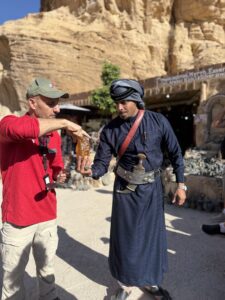
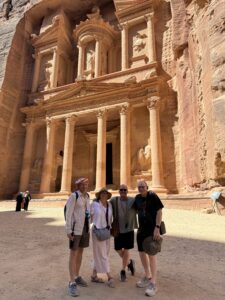
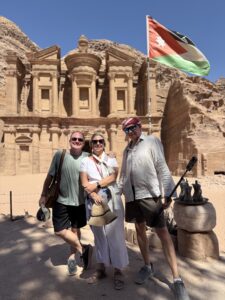
Last year I had the privilege of visiting the beautiful country of Jordan, and walking through the Siq in Petra — that’s the narrow gorge that leads to the Treasury. Our guide, Kamel, knew that route like the back of his hand. He knew the vendors and the other guides we passed along the way. He knew where the path got rough before we hit it. He understood the deeper history of what we were looking at, not just the postcard version.
He wasn’t an archaeologist. He wasn’t Bedouin. But he knew both of those worlds well enough to move between them — and that’s exactly what made him useful. Neither side needed to become the other. They needed someone fluent enough in both to make the handoff seamless.
That’s the role I’m describing. The security team shouldn’t have to understand the intricacies of running a business. The board shouldn’t have to become cybersecurity analysts. And neither one needs to be an expert in communications. What they need is someone who knows the terrain well enough to spot the rough patches early and make what’s real and urgent legible to the people who can actually do something about it.
That translation function isn’t a nice-to-have. It’s a strategic imperative.
It’s the work I have been doing my entire career, and it matters now more than ever as we all navigate the quickly changing risk governance landscape.
(Small aside: right before the Treasury came into view, Kamel had us turn around to admire a rock formation behind us instead. Then he spun us back around and played the Indiana Jones theme from his phone as the gap in the Siq opened up to reveal it. The man knew his history. He also knew how to make an entrance.)

No responses yet